

An Gairdín
Meditation Garden

The ever-changing beauty of nature provides us with one of the most powerful doorways to prayer and spirituality.
The hermitage garden is designed to provide a pace where nature, scripture and Glendalough’s history are combined in harmony, delighting the eye, comforting the soul and leading pilgrims to prayer and a deeper awareness of God.
The restoration of St. Kevin’s Church, the opening of hermitages and the development of a meditation garden Were part of the ‘Glendalough 2000 ‘ vision of Fr Sean O Toole who was Parish Priest 1997 to 2005.
The garden was designed by David Shortall.
Vision Statment
Glendalough, once a thriving centre of Celtic Christian spirituality will be re-established as a central place of pilgrimage.
The services in Glendalough will enable people
to reconnect with the roots of their own deepest spiritual energies to have the opportunity to be enfolded in the beauty and the healing touch of nature in the valley to experience the presence of God within their own being as they experience the presence of God in the peace and tranquillity of the valley.
Here too people will find others who are prepared to listen, to be companions and guides on the journey towards a deeper relationship with God.
The faith community of Glendalough will provide a hospitable space for all who stop here along the journey of life, a sacred space for healing, reconciliation and growth a space for deeper communion with our Creator and Host
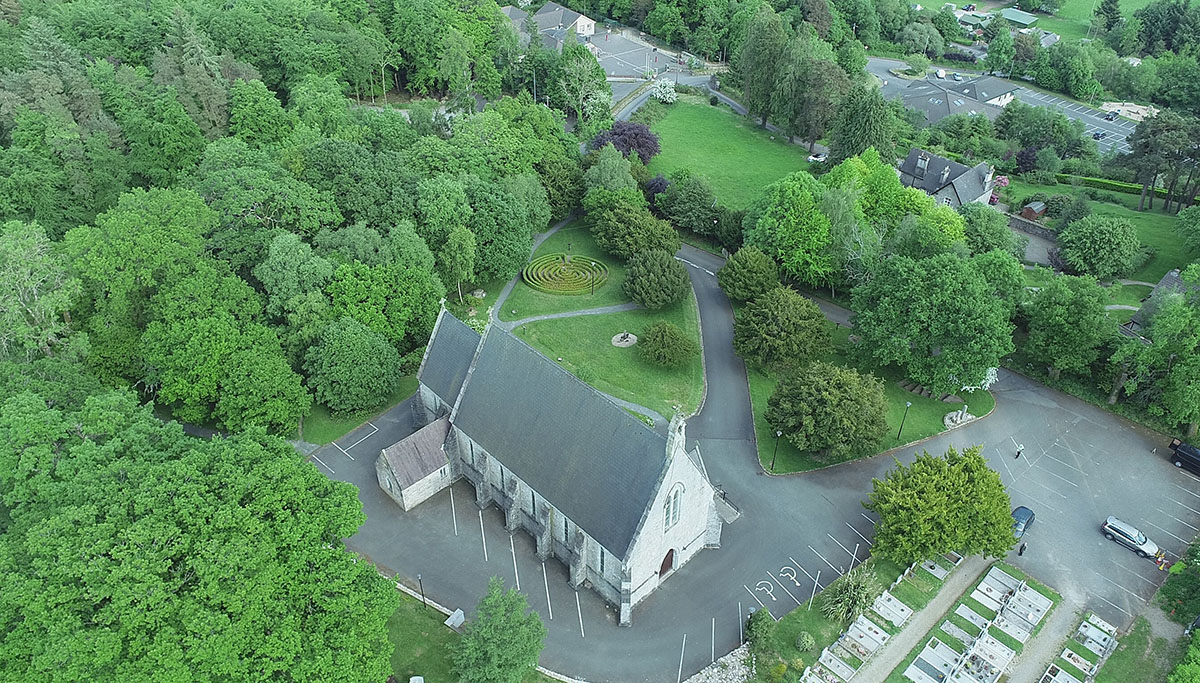
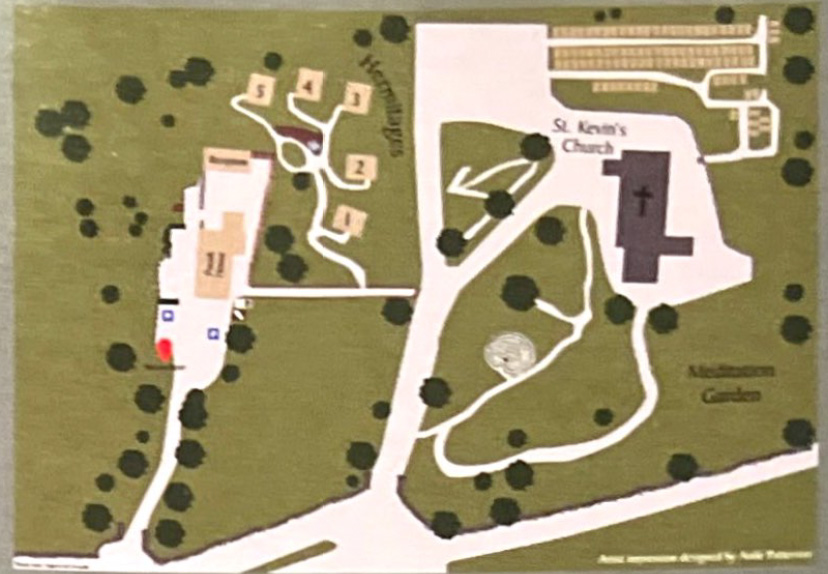
St Kevin's Church

The beautiful St Kevin’s Church, built during Famine times and restored to its original simplicity at the dawn of the Third Millennium of the Christian era, invites us to contemplate the Christian story and the faith that we have inherited through our families It has been since 1851 a centre of public worship and private prayer and represents the Christian community of the present day.
Tóchar Chaoimhín
Pathway One: The Way of Kevin
Take the small pathway to your left as you come down the steps from the Church.
This area captures the story of Glendalough through the ages, summarised on the display board.
We are invited to walk in the footsteps of Kevin who, in the 6th century, came as a hermit to Glendalough, in quest of solitude. Countless other pilgrims have followed him, coming to this sacred place on a spiritual journey to search for meaning and direction in their lives.
Leaba Chaoimhin – St Kevin’s Bed recalls the bronze age tomb on a cliff edge at the Upper Lake believed to have been used by Kevin when he first came to the valley. There was a lake and a magnificent waterfall in the area which came to be known as Diseart Chaoimhin – Kevin’s Desert – his solitary sacred space. The bronze sculpture, the work of the late Br Joe McNally, recale the legend of Kevin and the Blackbird, retold by the poet Seamus Heaney.
The inheritance left to us by the early monks is represented by the Rock of the Seven Churches. The ruined windows on the Rock also tell a story of destruction, recalling the disruption of the pilgrim journeys in times of foreign invasion and local tribal warfare. It is a story with light and shadow, telling of growth and decadence, challenges and resilience.
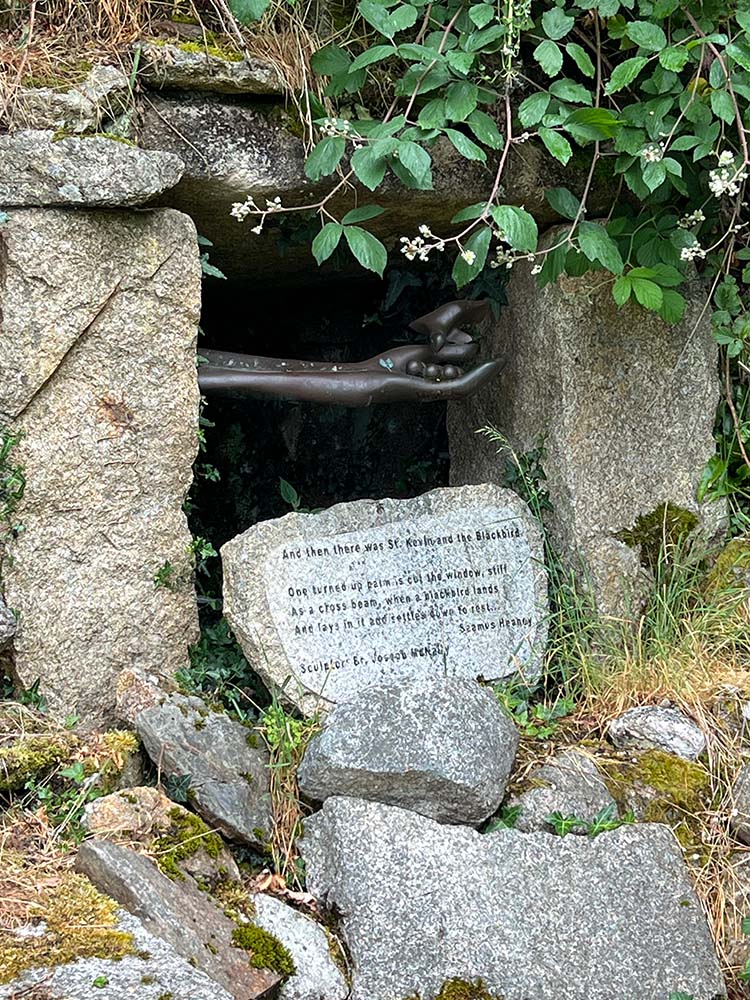
There are symbols that connect us with those who inhabited this valley of Glendalough; the miners, the foresters, the faith community. On a stone to the left of the path is a prayer for blessing for all God’s children, with a reminder to love and cherish one another and to pray for healing, comfort and consolation for all who have been abused.
The legacy of over 150 years of mining is still very visible on the landscape of the three valleys of Glendasan, Glendalough and Glenmalure. Equally alive are the memories and the presence of those men who worked in the mines and whose lives are very much part of the community and the many layers of a rich and vibrant history of this area.
Lead and zinc ore were mined in the valleys from the late 1700s to the closing of the mines in 1957 following a tragic fatal accident.
Trees have also been very much part of the landscape of Glendalough from the earliest times and were most likely used in the original structures of the Monastic City. The Anglo-Norman invasion in the 12th century brought about the exploitation and export of timber with reports in the 16th century of meagre tree cover in Glendalough. Planting of trees for the mines in the late 19th century and the later management in the 20th century by the Forest Service and the local foresters has ensured the development, maintenance and protection of the Glendalough and Laragh forests as we know them today.